TPU (95A)
Thermoplastic Polyurethane
Abrasion Resistant
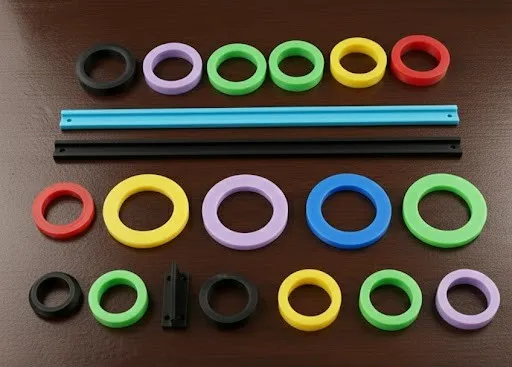
TPU is our most popular flexible material. It behaves like a tough rubber (similar to a shopping cart wheel). It is extremely resistant to abrasion, oils, and greases. It will bend and compress but is stiff enough to hold its shape.
Best For: Gaskets, Bumpers, Phone Cases, Drone Guards.
Best For: Gaskets, Bumpers, Phone Cases, Drone Guards.
| Shore Hardness | 95A ★★★☆☆ (Semi-Hard) |
| Flexibility | High ★★★★☆ (Bends) |
| Elongation | ~500% ★★★★★ (Stretchy) |
| Abrasion Resist. | Excellent ★★★★★ (Tough) |
| Chemical Resist. | High ★★★★☆ (Oils/Grease) |
| Heat Resistance | ~80 °C ★★★☆☆ (Moderate) |
TPE (Soft)
Thermoplastic Elastomer
Soft Touch
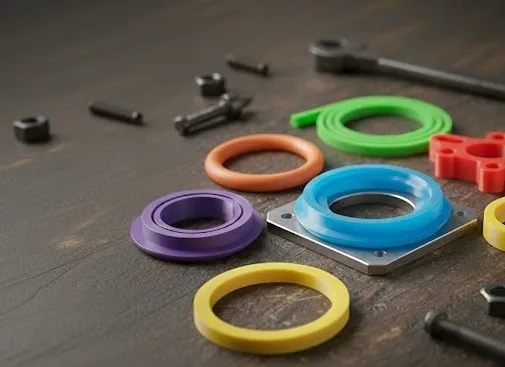
TPE is softer and more rubber-like than TPU. It has a matte, grippy surface finish, making it perfect for ergonomic handles or vibration dampeners. It feels closer to silicone or soft rubber than plastic.
Best For: Grips, Soft Seals, Vibration Dampeners, Wearables.
Best For: Grips, Soft Seals, Vibration Dampeners, Wearables.
| Shore Hardness | 85A ★★☆☆☆ (Soft) |
| Flexibility | Very High ★★★★★ (Floppy) |
| Elongation | ~600% ★★★★★ (Stretchy) |
| Grip / Friction | High ★★★★★ (Non-Slip) |
| Chemical Resist. | Moderate ★★★☆☆ (Ok) |
| Heat Resistance | ~70 °C ★★☆☆☆ (Indoor) |
TPC (Performance)
Thermoplastic Copolyester
High Heat
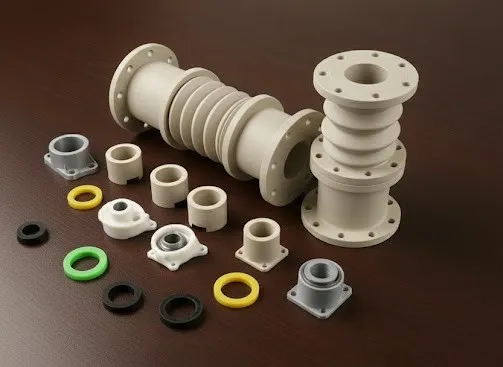
TPC is an engineering-grade elastomer. It bridges the gap between rubber and rigid plastic. It offers higher heat resistance (~90°C) and better chemical resistance than TPU/TPE. It snaps back to shape instantly (high resilience).
Best For: Automotive Boots, Bellows, Industrial Seals, Springs.
Best For: Automotive Boots, Bellows, Industrial Seals, Springs.
| Shore Hardness | 45D ★★★★☆ (Firm) |
| Flexibility | Moderate ★★★☆☆ (Springy) |
| Resilience | Excellent ★★★★★ (Snap Back) |
| Abrasion Resist. | High ★★★★☆ (Durable) |
| Chemical Resist. | High ★★★★★ (Automotive) |
| Heat Resistance | ~90 °C ★★★★☆ (High) |
Custom Prototyping
Your Design, Our Engineering
Print on Demand

Don't see what you need? We can make it.
Need a specific softness (Shore Hardness) or color? We can source custom elastomer grades for your project.
Services: CAD Design, Reverse Engineering, Batch Production.
Need a specific softness (Shore Hardness) or color? We can source custom elastomer grades for your project.
Services: CAD Design, Reverse Engineering, Batch Production.
| Max Build Vol | 256 x 256 x 256 mm (Large Scale) |
| Accuracy | ± 0.1 mm (Precision) |
| Lead Time | 4–10 Days (Turnaround) |
| File Types | STL, OBJ, STEP (CAD Ready) |
| Min Order | 1 Unit (No Minimum) |
| Design Service | Available (Hourly Rate) |
Frequently Asked Questions about Elastomers
What does "Shore Hardness" mean?
It measures how hard the rubber is. **95A (TPU)** is like a shopping cart wheel (hard rubber). **85A (TPE)** is softer, like a shoe sole. **45D (TPC)** is harder, closer to a hard hat but still flexible.
Can you print very soft rubber (Shore 60A)?
Extremely soft rubbers are difficult to print. Our standard softest material is TPE (85A). For softer parts, we recommend our **Custom Casting Service** (contact us for details).
Are these materials waterproof?
Yes, TPU and TPE are inherently waterproof and are often used for seals and gaskets. However, 3D printed parts may not be 100% watertight under high pressure without post-processing (sealing).